
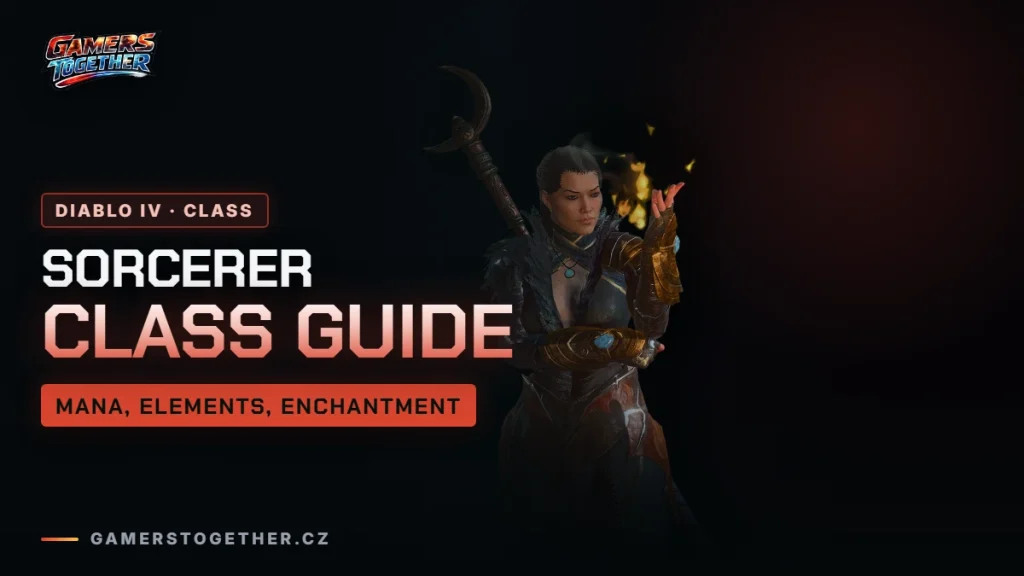
The Sorcerer in Diablo 4 casts with three elements and can turn a single skill into both an active attack and a passive bonus. This guide covers Mana, Enchantment Slots, the role of Intelligence and how the skill tree with Variant upgrades is built after the Lord of Hatred expansion. Everything reflects the game as of 19 October 2026 (Season 15, patch 3.2.3) and applies on PC, consoles and Switch 2. We deliberately leave out meta builds, since they shift with every season.
Role and class fantasy
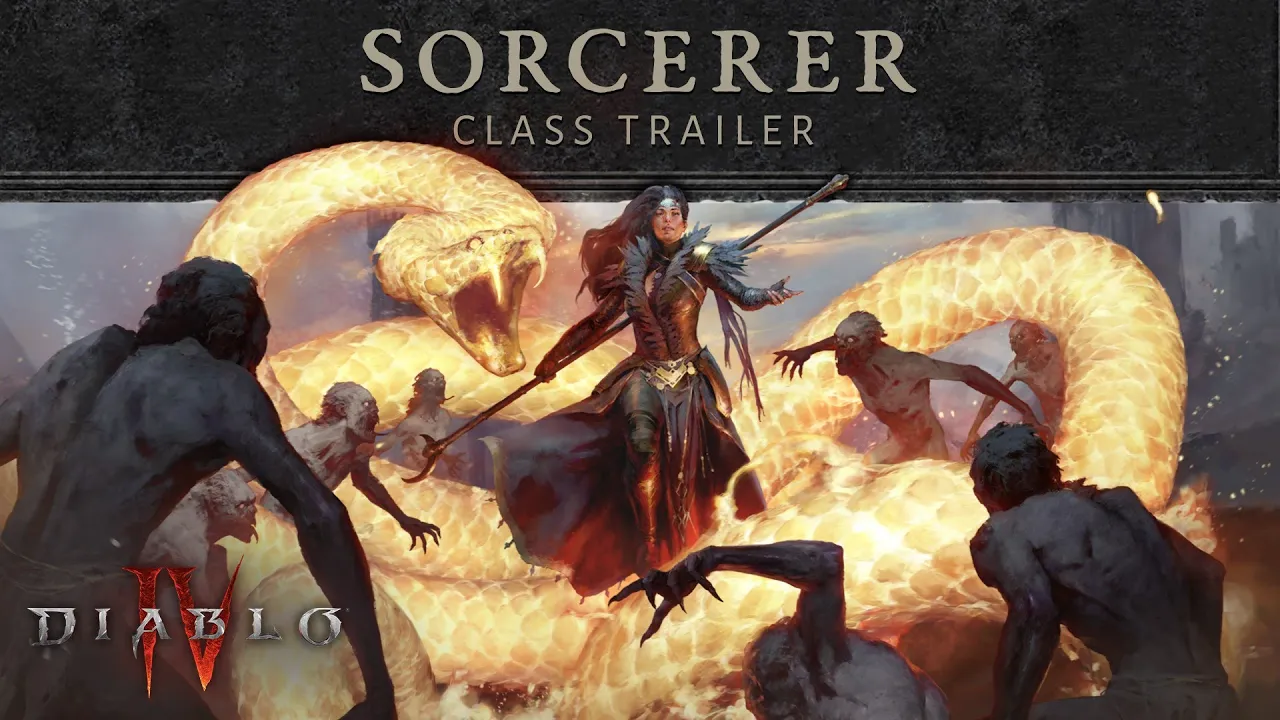
The Sorcerer is a spellcaster who commands three elements: Cold, Lightning and Fire. The class is part of the base game, so you don’t need an expansion. Where the Barbarian decides which weapon goes on which skill, the Sorcerer decides which element to hit with and how to combine spells.
The main attribute is Intelligence. The Necromancer shares it, but builds on bone, blood, shadow and summoned minions rather than elements.
| Feature | Sorcerer |
|---|---|
| Availability | base game |
| Resource | Mana |
| Class mechanic | Enchantment Slots |
| Main attribute | Intelligence |
| Elements | Cold, Lightning, Fire |
Mana and the three elements
The Sorcerer’s resource is Mana. You manage it in every fight: how much you have left decides which spell you can cast right now and which one has to wait.
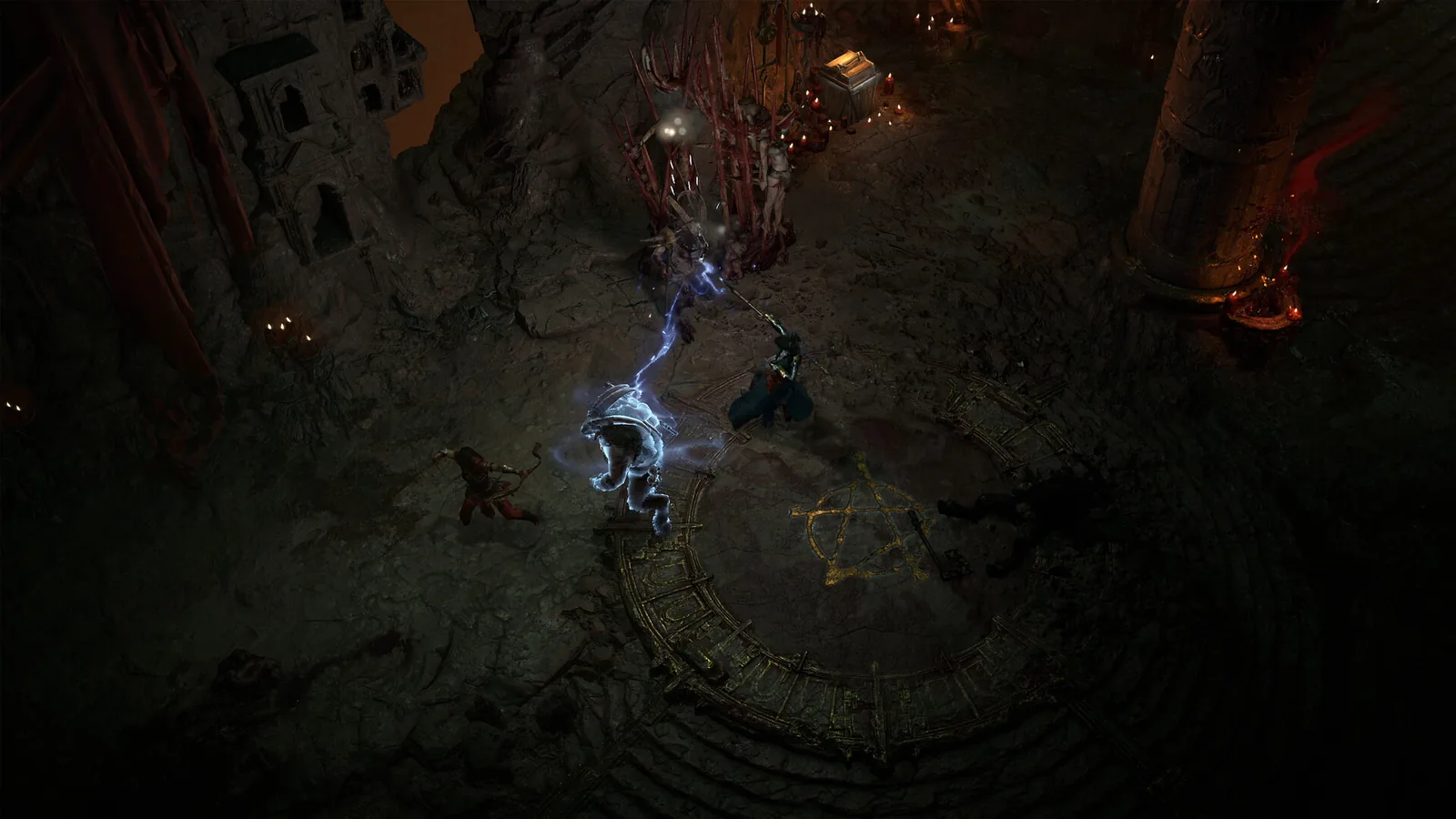
There are three elements: Cold, Lightning and Fire. Early on, feel free to try spells from all three and see which style clicks. The skill tree doesn’t lock you into one element; you decide where your points go.
If dark magic appeals to you more than elements, compare the Sorcerer with the Necromancer or the Warlock, who draws on Hellfire and the Abyss.
Enchantment Slots: a skill as a passive bonus
Every class in Diablo 4 has its own unique mechanic, and for the Sorcerer it’s Enchantment Slots. They unlock through a class quest while you level.
The idea is simple: a skill placed in an Enchantment slot grants a passive effect. You don’t lose the skill by doing so; you can still use it from your skill bar as normal. One skill can therefore work twice, once as an active spell and once as a passive bonus from the slot.
That’s why it pays to think about Sorcerer skills on two levels. Not every skill in a slot needs to be one you actively press. Some skills are worth taking mainly for the effect they give from an Enchantment slot.
Skill tree and Variant upgrades
Lord of Hatred rebuilt the skill tree for all eight classes, the Sorcerer included. The tree has six groups that unlock with your character level: Basic at level 1, Core at 3, three class groups at 4, 8 and 13, and Ultimate at 19. You can only have one Ultimate.
| Upgrade type | How it works |
|---|---|
| Skill points | up to 15 points in one active skill |
| Modifier | two pairs per skill, you pick one from each pair |
| Variant | 2 in the base game, a third with Lord of Hatred, you pick one |
Variant upgrades change how a skill works, and for spells they’re where your playstyle is decided most. Lord of Hatred owners choose from three variants per skill, players without the expansion from two.
You get a skill point with every level from 2 to 70, plus more from Season Ranks. After level 70 you continue with Paragon. Glyphs go into the Glyph sockets on Paragon Boards; they drop on Torment difficulties and are upgraded in The Pit. Our levelling and Paragon guide goes into more detail.
Who the Sorcerer is for
- Players who love combining things. Enchantment Slots turn your skill choice into a puzzle: what you press and what runs in the background.
- Anyone who wants a choice of element. Three elements give you room to try different styles on one character.
- Fans of the classic wizard. No weapon arsenal, no summoned helpers, just spells and Mana.
If you’d rather fight with a weapon in hand and earn your resource, the Barbarian will suit you better. And if you want an army around you, try a summoner.
How to get started with the Sorcerer
- Pick a difficulty based on experience. Newcomers to the genre start on Normal, experienced players on Hard.
- Try all three elements. It costs you nothing at low levels and shows you what you enjoy.
- Unlock Enchantment Slots. The class quest comes while levelling; that’s when building passive effects really starts.
- Collect Intelligence. It’s the main attribute you compare gear by.
- You can skip the campaign. If you’ve finished it at least once, a new character can skip it.
What to sort out before your first character, with your account and with the expansions, is summed up in our beginner’s guide.
Join our Discord to discuss which skill belongs in your Enchantment slot and to find people to group with: Discord GamersTogether.
FAQ
Yes. A skill placed in an Enchantment slot gives you a passive effect, and you can keep using it as an active spell at the same time.
Three: Cold, Lightning and Fire. While levelling you can try spells from all three and then decide where to put your skill points.
In the base game each active skill has two Variant upgrades. Lord of Hatred adds a third. You always pick only one.
Intelligence. The Necromancer has the same main attribute, while the Barbarian and the Paladin collect Strength.
Information verified on 19 October 2026. You’ll find the other classes and guides in our Diablo IV guides.