
Persona 4 Revival plays on two levels. By day you live through a year as a high-school student in the small town of Inaba, going to school, working part-time and building relationships. Inside the world within the television, you explore dungeons and fight Shadows in turn-based battles. Each half shapes the other. Below you will find how combat, Personas and daily life work, and what Revival adds, as described by SEGA and ATLUS.
Two worlds: Inaba and the TV world
The story opens with a wave of mysterious deaths in Inaba and an urban legend about the Midnight Channel. The protagonist and his friends discover that they can enter a world inside the television, and as the self-appointed leader of the Investigation Team he tries to rescue the people who have gone missing there. The TV world is shrouded in thick fog, and its locations look like a shopping district or a haunted castle, for example. They are roamed by Shadows, dangerous manifestations of the suppressed sides of the human psyche.
Exploring dungeons
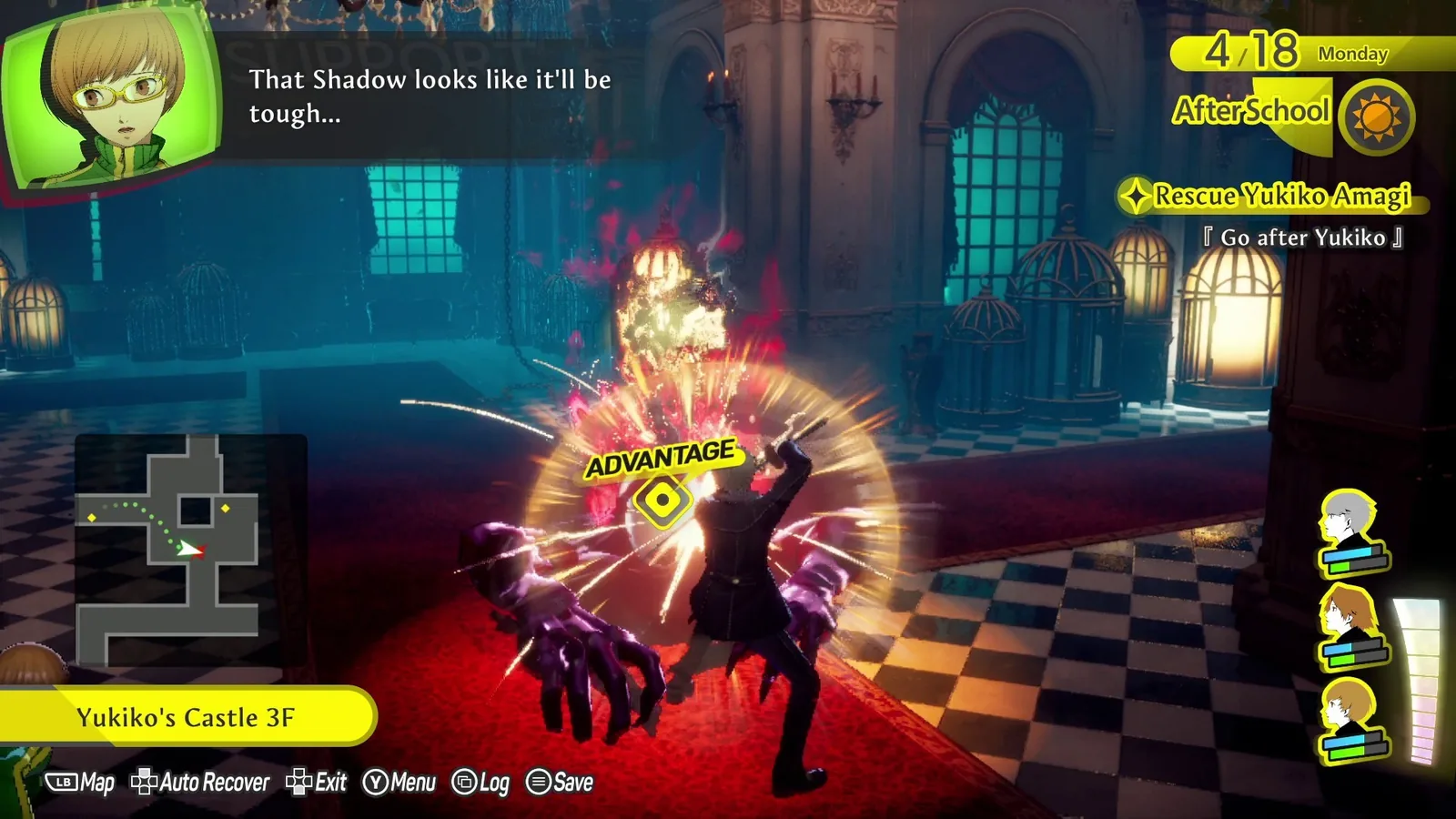
A battle starts when you touch a Shadow in a dungeon. Catch it off guard and you get an Advantage Encounter, so you move first. If it ambushes you, the enemy starts instead. New in Revival is Guard: while exploring you can block, and a successful block stuns the Shadow. You can then attack with the upper hand or skip the fight entirely.
Turn-based combat
The basic rule is simple: find the weakness. Enemies are weak to certain types of attack, and when you hit a weakness, you knock the enemy down and earn an extra turn, known as 1 MORE. Knock down every enemy and you can launch an All-Out Attack, a joint strike by the whole party. After a battle you can sometimes gain a new Persona as well.
Revival adds three techniques on top of that:
- Baton Pass: during a 1 MORE you hand your turn to a teammate. Useful when you want to target a different enemy’s weakness.
- Send Flying: if a Shadow is under a status effect, a normal attack can send it flying into another one. That Shadow takes damage and the same effect.
- Prime Time: a gauge fills up during battle. Once it is full, you get a chain of turns, skills cost nothing, enemy resistances do not apply and Baton Pass is free to use. You finish it with a Series Finale attack.
SEGA lists them, together with Guard, among Revival’s new features. Exactly what has changed compared with Golden is summed up in our Revival vs Golden comparison.
Personas, Wild Card and the Velvet Room
The other members of the team each have their own Persona. Yosuke fights with Jiraiya, Chie with Tomoe, Yukiko with Konohana Sakuya and Kanji with Take-Mikazuchi. The protagonist has a special ability called Wild Card and can switch between several Personas. Each one changes your available skills and your weaknesses, so it pays to swap Personas depending on the enemies you face.
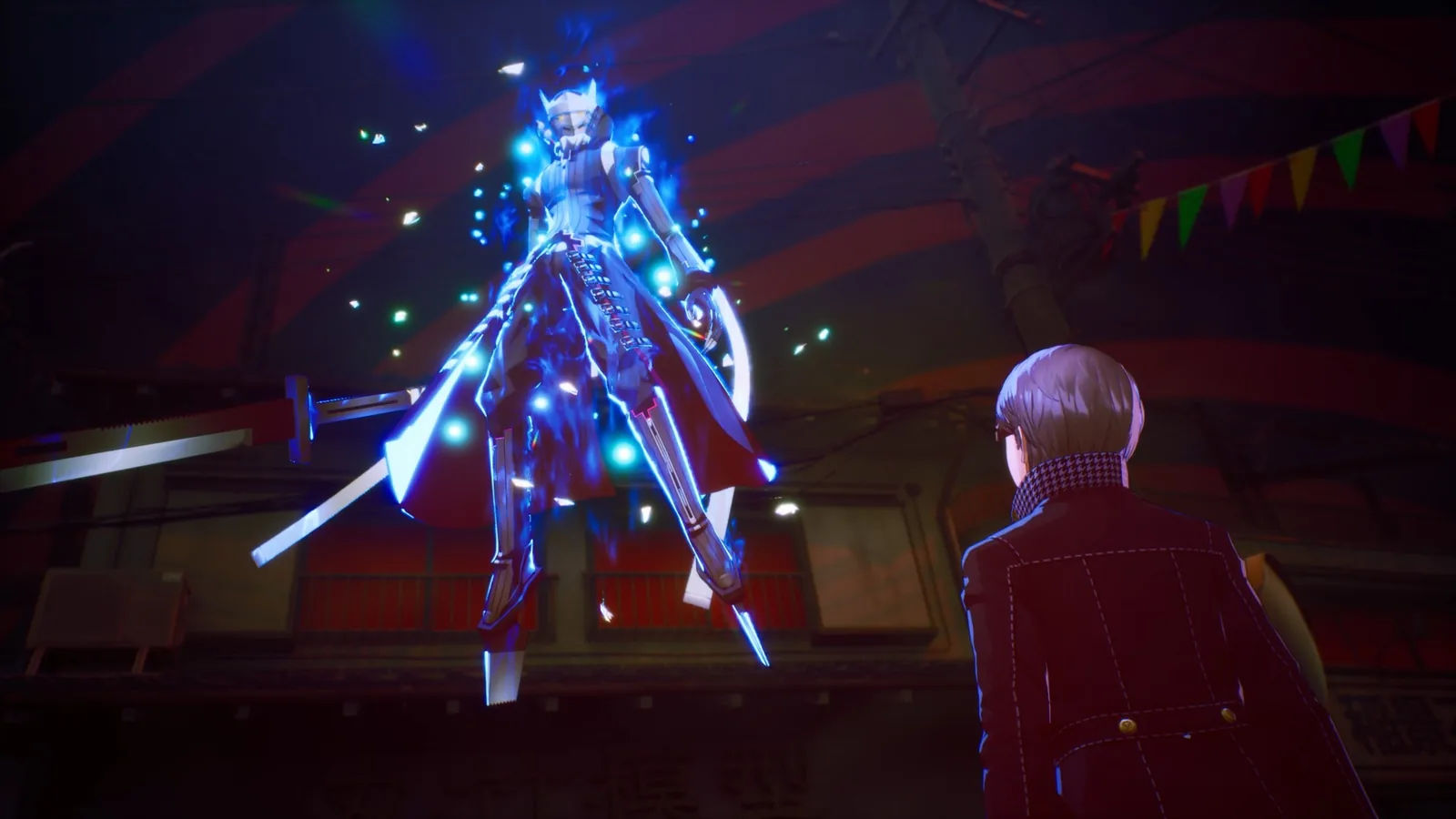
You create new Personas in the Velvet Room, a place between dream and reality run by Igor and his assistant Margaret. Fusion combines Personas into a new one, which can inherit skills from its predecessors. That is how you build your own combinations of attacks.
Life as a high-school student
Outside the TV world you live an ordinary year. You go to school, study, join clubs, take part-time jobs, sing karaoke or go on dates. Time moves forward with every activity, so you can only fit in so much each day. Some events only happen on a particular date, at a particular time of day or in particular weather. Later in the story you also get to leave Inaba.
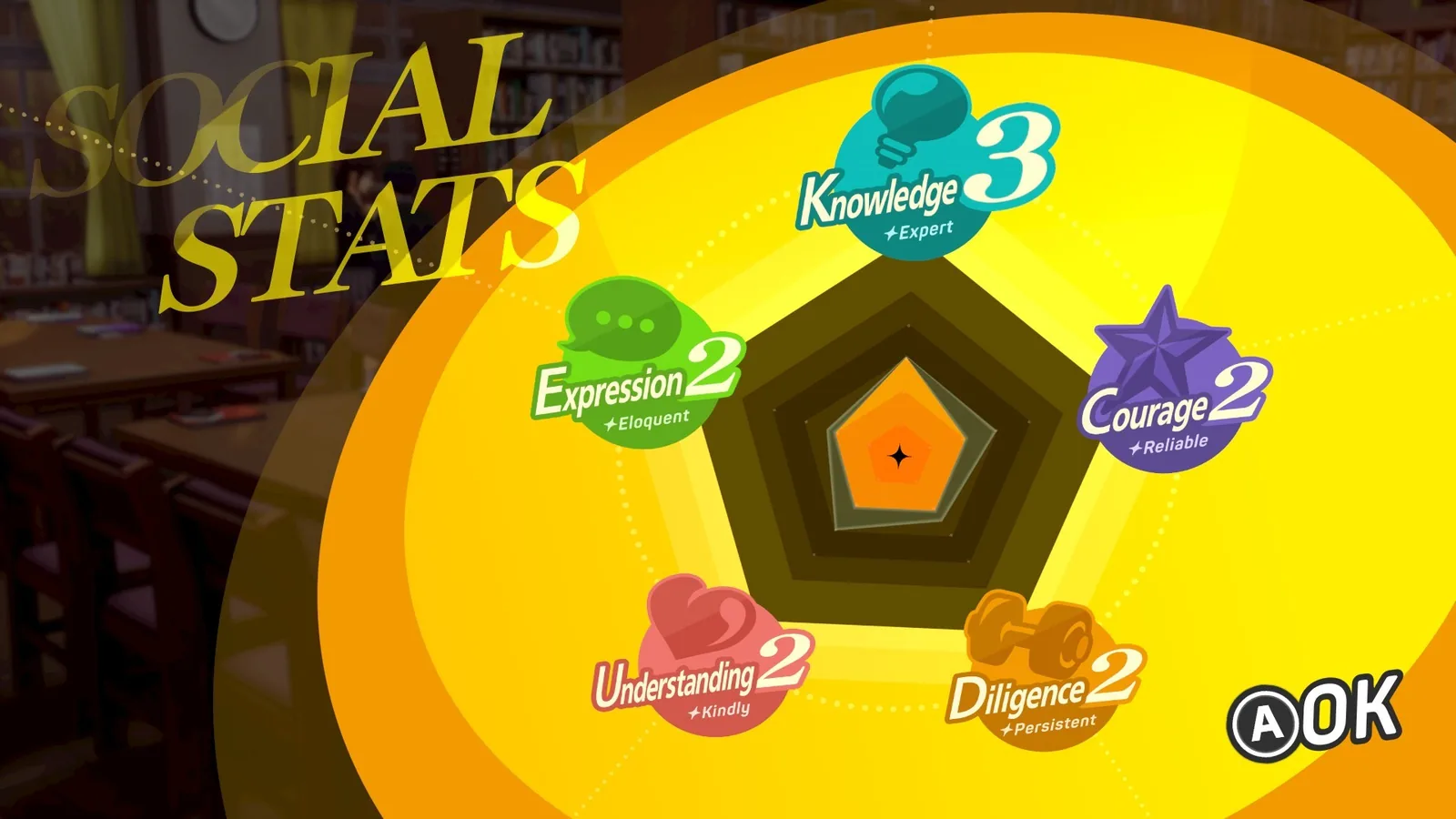
You raise five social stats, such as Knowledge, Courage and Diligence, by studying, working part-time and picking what to say in conversations. Once they are high enough, new options open up. Your relationships with the people of Inaba, called Social Links, strengthen your Personas during fusion and unlock new combat skills. According to Steam, your choices also lead to different endings.
New activities in Revival
SEGA promises new seasonal events and more time with the other characters. One new activity is a series of tours of Inaba with Aika Nakamura from the Aiya restaurant. You search the town for old photos, and when you show them to your friends, you unlock scenes from their past. Social Links and the new scenes are now voiced, in English or Japanese.
Before you start
The game is single-player and offers full controller support on PC. Subtitles come in 15 languages, including English, French, German, Spanish and Japanese, with voice-over in English and Japanese. The game launches on 18 February 2027; launch details are in our release date guide. SEGA has not announced the game’s length or difficulty settings yet.
Want to swap tips on planning your first weeks in Inaba? Join our Discord to find other Persona players. Hop into the GamersTogether Discord.
FAQ
A single-player, turn-based RPG. It combines dungeon exploration and combat with the daily life of a high-school student and building relationships.
You hit an enemy’s weakness, knock it down and get an extra turn. Knock down every enemy and you launch an All-Out Attack. New additions are Baton Pass, Send Flying and Prime Time.
The protagonist’s ability to use and switch between several Personas. According to the official profiles, the other team members each have their own Persona.
Yes. According to the Steam description, your choices lead to different endings.
Information verified on 20 November 2026. For an overview of the game, read our game overview. More guides are in our Persona section.