
The Barbarian brings a whole armoury to every fight and can swing something different with each attack. This guide explains how Fury works, what the Arsenal system and the Technique slot do, how the skill tree is laid out after the Lord of Hatred expansion and how to get started. It applies to every platform and reflects the game as of 19 October 2026 (Season 15, patch 3.2.3). You won’t find meta builds here: those change every season, the way the class works doesn’t.
Role and class fantasy
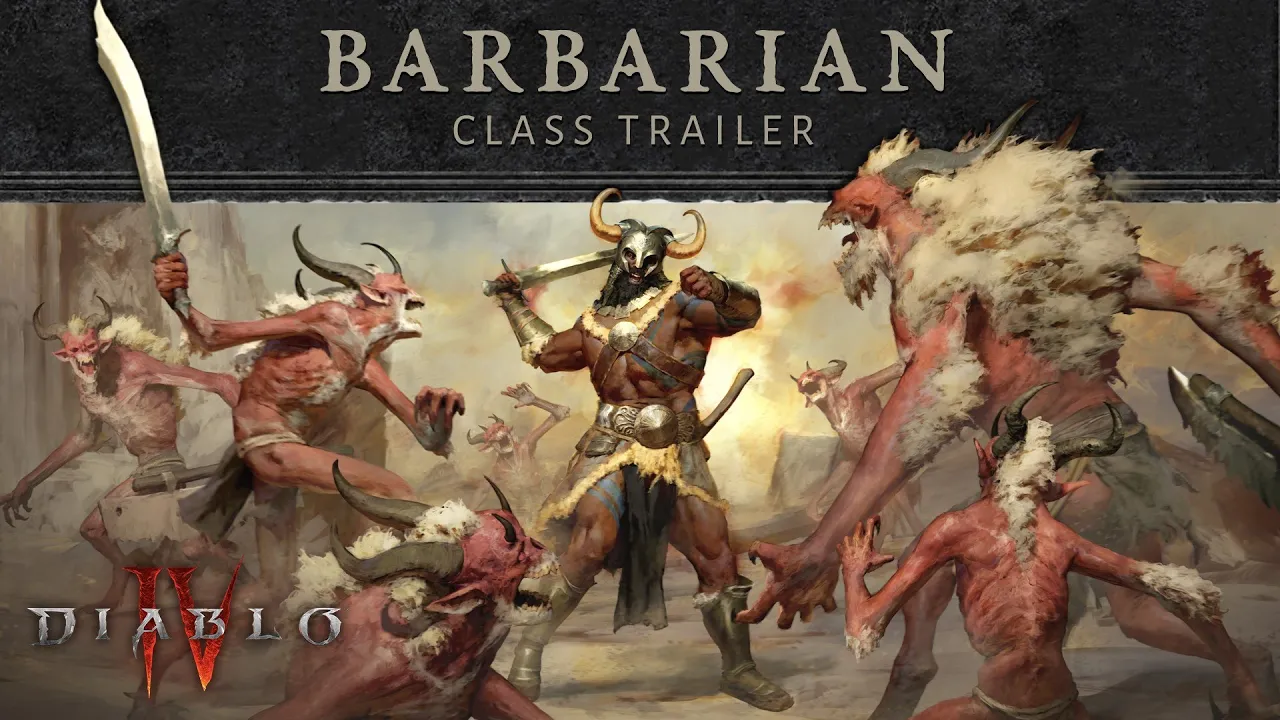
The Barbarian is one of the five base game classes, so you can play him without any expansion. He is a warrior who relies on raw strength and his weapons. Unlike the other classes, he carries several weapons at once and uses each one for something different. His skills deal Physical damage at their core, so you don’t have to juggle elements the way a Sorcerer does.
His main attribute is Strength. When you compare two items, Strength is the first stat a Barbarian looks at. He shares that attribute with the Paladin, who builds around shields, heavy armour and auras instead of an arsenal of weapons.
| Feature | Barbarian |
|---|---|
| Availability | base game |
| Resource | Fury |
| Class mechanic | Arsenal + Technique slot |
| Main attribute | Strength |
| Damage | Physical at the core |
| Weapons | several weapons at once |
Fury: a resource you have to earn
Fury is generated in combat, so you begin each encounter with little of it and build it up by fighting. Outside combat, Fury slowly drains away, so there’s no point saving it for later.
In practice this creates a rhythm: fighting builds Fury, skills spend it. The longer you stay in combat and the more smoothly you move from one pack of enemies to the next, the more Fury you have to work with. Breaks between fights cost you what you’ve built.
Arsenal and the Technique slot
The Barbarian’s class mechanic is the Arsenal. Every class has its own unique mechanic, unlocked through a class quest while levelling, and for the Barbarian it’s this weapon system.
The Arsenal lets you assign a specific weapon to each attack skill. That skill then strikes with the weapon you picked for it. This is why every single weapon matters for a Barbarian, not just one main weapon.
On top of that there’s the Technique slot, where you place the effect of another weapon. So the Arsenal decides which weapon each skill hits with, and the Technique slot adds an extra effect on top.
Skill tree after Lord of Hatred
Lord of Hatred rebuilt the skill tree for all eight classes, so older Barbarian guides no longer match the game. Today’s tree has six groups that unlock with your character level:
- Basic from level 1,
- Core from level 3,
- three class groups from levels 4, 8 and 13,
- Ultimate from level 19 (you pick only one).
An active skill takes up to 15 points. Each skill has two pairs of Modifier upgrades, and you pick one from each pair. Above those sit Variant upgrades, which change how a skill works: the base game gives two per skill, Lord of Hatred owners get a third, and you always choose just one.
You earn a skill point for every level from 2 to 70, and Season Ranks add more. Then comes Paragon: points for Paragon Boards with attribute nodes, Glyph sockets and extra boards you attach to the starting one. Our levelling and Paragon guide shows how it all fits together.
Who the Barbarian is for
- Players who want to be in the thick of it. Fury builds through fighting, so the Barbarian rewards smooth, uninterrupted progress.
- Gear tinkerers. The Arsenal turns every weapon into its own decision. If you enjoy comparing items, you’ll have plenty to do.
- Anyone who doesn’t want to manage elements. Damage is Physical at its core, no switching between fire, cold and lightning.
If casting with elements appeals to you more, look at the Sorcerer and Mana. If a defensive style with a shield appeals to you, compare the Barbarian with the Paladin.
How to get started with the Barbarian
- Pick a difficulty. If Diablo is your first ARPG, start on Normal; with genre experience, go for Hard. Expert and Penitent aren’t meant for a new character.
- Decide between Seasonal and Eternal. A seasonal character starts from scratch and gets seasonal content; an Eternal character keeps everything but doesn’t get seasonal rewards.
- Complete the class quest. The Arsenal unlocks through a quest while levelling; until then you play with the regular skill tree.
- Watch Strength. It’s the first number to check on new items.
- Don’t judge just one weapon. Thanks to the Arsenal, every assigned weapon is part of your power.
General advice on your first character, your account and the expansions is in our beginner’s guide.
Join our Discord to talk through which weapon goes on which skill and to find party members for the season or the Eternal Realm: Discord GamersTogether.
FAQ
No. The Barbarian is one of the five base game classes. You only need an expansion for the Spiritborn (Vessel of Hatred) and for the Paladin and Warlock (Lord of Hatred). Lord of Hatred does add a third Variant upgrade to skills for every class, though.
You place the effect of another weapon in the Technique slot. It works on top of the Arsenal, where you assign specific weapons to individual attack skills.
That’s how the Barbarian’s resource is designed. Fury is generated in combat and slowly drains outside it, so the Barbarian benefits from moving straight from one fight into the next.
The Barbarian’s main attribute is Strength. The Paladin shares it, while the Sorcerer and the Necromancer build on Intelligence instead.
Information verified on 19 October 2026. You’ll find the other classes and guides in our Diablo IV guides.