
Want to fire arrows in Diablo 4 and be stabbing with daggers a second later? That’s the Rogue, a class that carries melee and ranged weapons at the same time. This guide explains how Energy works, what the three Specializations are and why you can switch them whenever you like, which damage types the Rogue uses and how to get started. It applies to PC, PlayStation, Xbox and Switch 2 and reflects the game as of 19 October 2026, after the Lord of Hatred expansion, in Season 15 with patch 3.2.3. There are no season-specific builds here.
Role and class fantasy
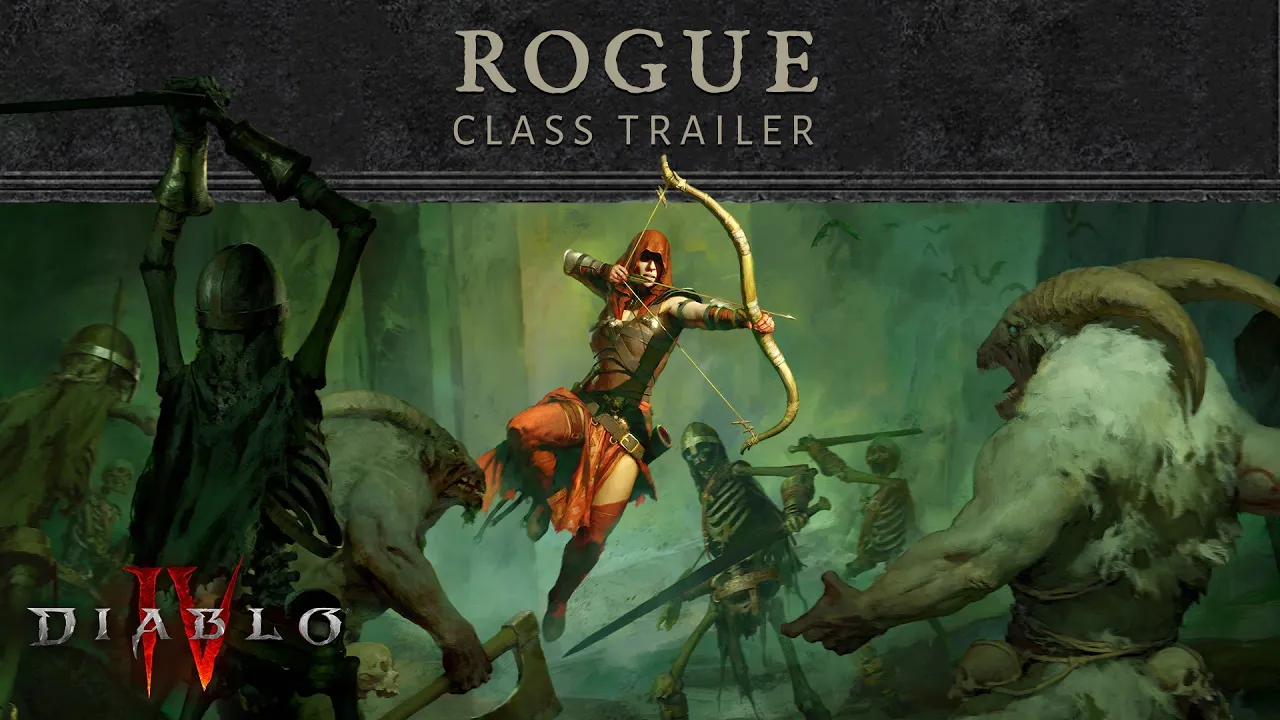
The Rogue is a nimble fighter who doesn’t commit to a single range. She carries two one-handed melee weapons plus a bow or crossbow, all at once. Depending on the situation she switches between close combat and ranged fire without changing gear.
The Rogue is part of the base game, so you can play her without an expansion. Her main attribute is Dexterity, which she shares with the Spiritborn from Vessel of Hatred.
| Feature | Rogue |
|---|---|
| Availability | base game |
| Resource | Energy |
| Class mechanic | Specialization (one of three) |
| Main attribute | Dexterity |
| Weapons | 2 one-handed melee + bow or crossbow |
| Damage | Physical, plus Cold, Poison and Shadow |
Energy and damage types
The Rogue’s resource is Energy. Unlike the Barbarian’s Fury, Energy slowly regenerates on its own, so you don’t have to earn it first. Once you’ve spent it, wait a moment or play more economically and your pool fills up again.
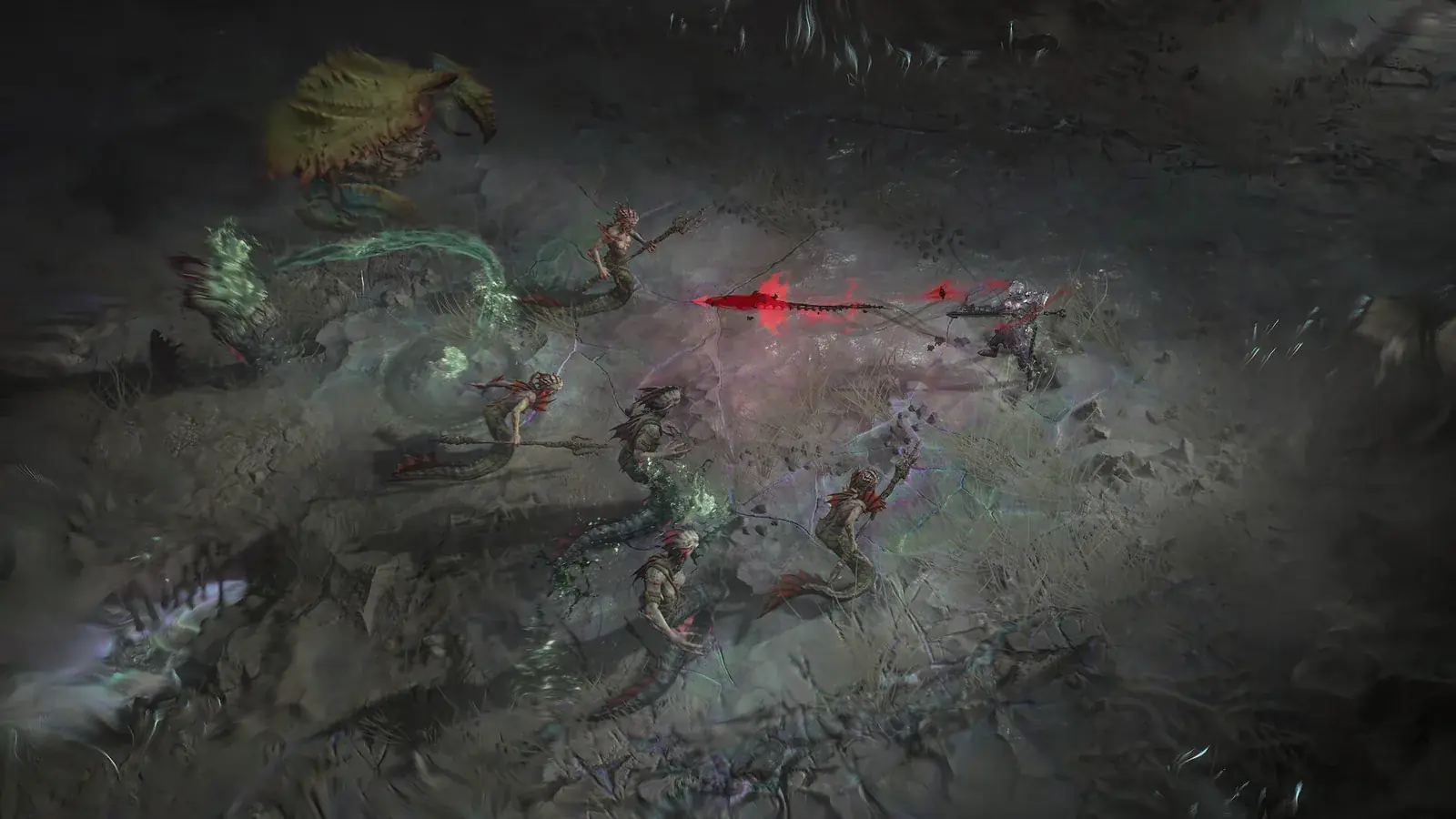
Her damage is Physical at its core. On top of that the Rogue has three more types: Cold, Poison and Shadow. That sets her apart from the Barbarian, whose skills deal Physical damage at their core.
Specialization: three passive styles
Every class in Diablo 4 has its own unique mechanic, and the Rogue’s is Specialization. It unlocks through a class quest while you level.
A Specialization is a passive style you choose from three options. Only one is active at a time, but you can switch it whenever you want. So the decision isn’t permanent, and you can change it when the situation, your gear or simply your mood changes.
For a new player, the advice is simple: try all three. You can switch any time, so you’ll quickly find out which one fits the way you play.
Skill tree after Lord of Hatred
Lord of Hatred rebuilt the skill tree for every class, so older Rogue guides no longer apply. The tree has six groups. Basic opens at level 1, Core at level 3, three class groups at levels 4, 8 and 13, and Ultimate at level 19.
An active skill takes up to 15 points. Each skill has two pairs of Modifier upgrades, and you choose one from each pair. Then there are Variant upgrades, which change how the skill works: two in the base game, a third with Lord of Hatred, and you pick one. You can only have one Ultimate skill.
Skill points come with every level from 2 to 70, plus extra ones from Season Ranks. After level 70, Paragon awaits, with boards for even more points. On a seasonal character you level Paragon from zero as well. Our guide to seasons explains how they differ from the Eternal Realm, and levelling and Paragon covers the road from level 1 to Paragon.
Who the Rogue is for
- Players who don’t want to choose between melee and ranged. The Rogue has both at once.
- The indecisive. You can switch Specialization any time, so your first choice doesn’t tie you down.
- Anyone who wants a steady flow of resource. Energy regenerates on its own, with no need to build it up first.
If Dexterity appeals but you’d like a style with Spirit Guardians and a glaive, check out the Spiritborn. If you’d rather stand on the front line with several melee weapons, compare the Rogue with the Barbarian.
How to get started with the Rogue
- Pick a difficulty. Normal if this is your first ARPG, otherwise Hard. Leave Expert and Penitent for later.
- Choose your realm based on your friends. Seasonal and Eternal are separate; you can only play together in the same realm.
- Try both ranges. You always have your melee weapons and your bow or crossbow with you.
- After the class quest, cycle through all three Specializations. You can switch them any time.
- Watch Dexterity. It’s the main attribute you compare gear by.
Account basics, expansions and your first character are covered in our beginner’s guide.
Join our Discord to team up with players in the same realm and talk through which Specialization suits you: Discord GamersTogether.
FAQ
Yes, any time. The Rogue picks one of three passive Specializations and can switch it whenever she likes.
Both. The Rogue carries two one-handed melee weapons plus a bow or crossbow, all at once.
On its own, slowly. The Rogue doesn’t have to earn it first the way the Barbarian builds Fury.
Physical at the core, plus skills dealing Cold, Poison and Shadow damage.
No, the Rogue is a base game class. Lord of Hatred does add a third Variant upgrade to each of her active skills, though.
Information verified on 19 October 2026. You’ll find the other classes and guides in our Diablo IV guides.