
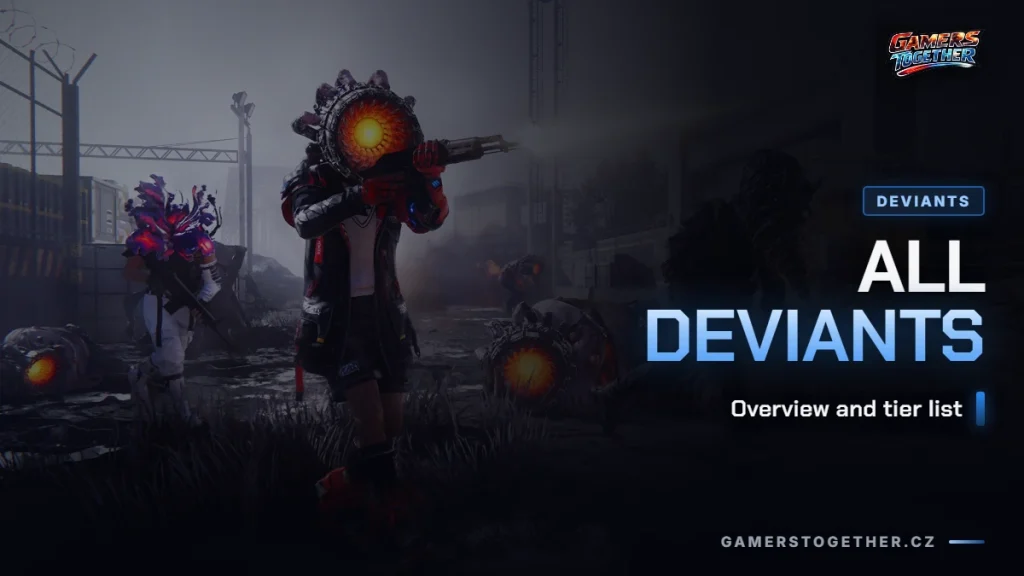
Once Human has one mechanic you won’t find in every survival shooter: Deviants, mutated animals you first hunt as enemies and then take in as companions. What separates a Deviant that actually helps you in combat or at your base from one that just takes up storage space isn’t the species, though. It’s the traits and the role you put it in. This overview shows you how to get Deviants in the first place, how they’re categorized by use, how you look after them through the Isolated Securement Unit, why traits matter more than the name on the card, and what the last two updates, 3.0.4 and 3.0.5, did to them.
What Deviants are and why they matter
Deviants are animals from Nalcott hit by the same contamination that transformed the rest of the world. Instead of classic animal AI opponents, the game turned them into a full collecting and base-building system. You first meet them as enemies out in the wild, but once captured they become permanent companions that you manage as carefully as your gear.
They also matter because they feed into several game systems at once. A combat Deviant helps you survive in the wild or in a Raid Zone, production Deviants keep working on your territory even while you’re offline, and even purely decorative ones have their own market. You can tell from the fact that dedicated cosmetic items are released for them and that they are goods players sell to each other through vending machines. A good Deviant pays you back whether you mostly play calmly on your territory or actively in combat.
How to capture them and where they come from
The basic way to get a new Deviant hasn’t changed: you find it in the wild, weaken it in combat and then secure it with a special device you unlock fairly early in the game. You take the secured Deviant back to your territory, where you assign it to the role that matches its species.
Hunting and collecting Deviants also has its own game scenario called Deviation: Survive, Capture, Preserve. If you enjoy this side of the game more than shooting other players, it’s the server to pick specifically for this mechanic.
Besides hunting in the wild, there are other ways to get Deviants:
- through reward crates focused on picking Deviants (for example the Deviation Selection Supply Crate, which shows up in comeback reward packs for players returning to the game),
- through vending machines, where players trade Deviants with each other; here too it’s important to check the traits of the specific Deviant, not just its species,
- and indirectly through cosmetic items for Deviants (so-called Deviation cosmetics), which aren’t a new species or a new Deviant, just a look you apply to a Deviant you already own.
You can only use a captured Deviant’s abilities once you place it in a structure called the Isolated Securement Unit, at least according to an older description of the mechanic, which the developers haven’t reworked from the ground up since. You can build several of them on your territory so you have room for your whole collection, and interacting with the device opens an interface with all the details about the Deviant stored inside. Still, check the exact name of the structure and the look of the interface in the game itself, because names of UI elements like this change from time to time without a mention in the patch notes.
Categories by use: combat, base and companion
Deviants are divided by what you actually use them for in the game, and that role is usually set by the species:
- Combat Deviants go into fights with you and have an active ability or an ultimate attack. Examples include Soul Summoner, Whalepup, Invincible Sun, Pyro Dino and Polar Jelly. Since update 3.0.4, the combat abilities of selected Deviants also work directly in first-person view, which wasn’t possible for any of them before.
- Base and production Deviants are assigned to work on your territory, where they automatically help keep the base running instead of joining you in combat. This role suits species whose ability is better used in peace than in a firefight.
- Companion Deviants work more as companions on and off your territory. You can pet them, and they are more about atmosphere than hard numbers. This is exactly the side of the game that cosmetic add-ons for Deviants cover, letting you set your companion apart from the same species someone else owns.
Most players keep a mix of all three categories, because combat Deviants don’t last long without an economy backing them from the territory, and the other way around.
According to an older description of the mechanic, the same split used to be a bit finer and was handled directly at the Isolated Securement Unit level: production Deviants for the territory, combat Deviants that required syncing with your cradle, a separate group that crafted a specific item instead of a resource, and purely decorative ones that worked as furniture. Today’s three-way split into combat, territory and companion Deviants basically covers this; it just merges item crafting and resource production into one category. Whether the game still keeps that distinction separate as of version 3.0.5 is something to check in the game itself.
Mood and Deviant Power: why you have to look after your Deviants
For a Deviant to actually produce or fight at your side, owning it isn’t enough. It also needs a good mood and enough Deviant Power, which is its internal energy. According to an older description of the mechanic that hasn’t been reworked yet, a Deviant’s mood affects production speed, resource gathering and combat performance, while Deviant Power is consumed whenever it uses abilities and refills gradually on its own. The better the containment environment you give it (meaning a higher-quality Isolated Securement Unit), the faster both recover.
The surroundings of the unit itself also affect regeneration speed. For each one, the interface shows you the specific conditions that particular Deviant needs: some benefit from colored light nearby, others from music. A condition you’ve met shows up checked in the menu, so you can easily tell whether the Deviant you care about has what it wants at home.
Combat Deviants need one more step before they head into action with you: syncing with your cradle right at the Isolated Securement Unit. Without it their combat ability stays locked, even if the Deviant has great traits. After syncing, the Deviant responds to your command while you move around the map normally. This mechanic is described in older sources, so check the exact keys and menus in the current version of the game, although the principle of syncing may well not have changed fundamentally since.
Traits matter more than the species itself
A trait is a property a Deviant gets at random the moment you capture it, and it’s what decides whether that specific Deviant is usable or whether you’d rather let it go. Two Deviants of the same species can work completely differently side by side, because one got a trait that boosts its base ability and the other a trait that doesn’t complement it at all.
That’s why experienced players, instead of hunting by name, would rather capture several Deviants of the same promising species and compare their traits before deciding which one to keep for good. You can also see traits on Deviants you’re only thinking of buying through a vending machine, so before you pay for someone else’s Deviant, it’s worth checking whether it has the trait you really need, not just an attractive species name.
According to an older description of the mechanic, traits used to fall roughly into four groups: traits that speed up Deviant Power recovery and so extend how long the Deviant stays active; traits that extend the duration of a summoned ability; traits that affect the whole territory, for example resource production; and traits that, after syncing with your cradle, give a bonus directly to you rather than the Deviant. That description is more than a year old, so check the specific trait names and their numbers for version 3.0.5 in the game itself. The split into “what it does for the Deviant”, “what it does for the territory” and “what it does for you” still works today as a general framework for judging traits.
Which Deviants are worth it, and above all for what
A universal “best Deviant” doesn’t make much sense in Once Human, because the answer depends on whether you play in a calmer PvE environment or in open PvP. Based on what can be checked against official sources for versions 3.0.4 and 3.0.5, a rough breakdown looks like this:
- Active first-person combat: Invincible Sun, Pyro Dino and Polar Jelly are among the Deviants whose attacks the developers enabled for first-person view first. If you play a lot in first person and want your Deviant pick to reflect that, this trio is a safe choice.
- Sustained damage and proc effects: Soul Summoner relies on frequently triggering its Phantom Radiance Sparrow ability. After the fix in update 3.0.5, which standardized the cooldown calculation at 0.5 seconds, the proc rate went up significantly, so it’s now a more reliable choice for longer fights than before the fix.
- Status damage builds: after 3.0.5, Whalepup has a clearly defined role. All of its damage applies 40% Status Vulnerability to the target for 5 seconds. It used to also have a Weapon Vulnerability effect on top, which didn’t fit its concept and which the developers removed, so today it’s a clean choice for builds based on Status DMG, not a universal pick.
Buzzy Bee is one of the names that come up most often in the community and in searches, because it’s a long-established and popular Deviant. According to an older description, it was a production Deviant focused on growing plants and herbs that supply the base with food and medicine for longer survival. Its exact current role and effects for version 3.0.5 couldn’t be verified against official sources, though, so rather than relying on the old description, look up the current data in the game itself before you build around it.
In general, any fixed ranking stays accurate only until the next update. After all, Whalepup and Soul Summoner were both changed twice in a single month. It’s more reliable to go by role and build type than by one specific name.
The choice also depends on the server you play on. On PvE servers and in scenarios focused on survival and collecting (such as Deviation: Survive, Capture, Preserve), it pays to bet on Deviants that keep up sustained damage or automate your territory, because no opponent is attacking you and you have time to build. On PvP servers and in scenarios like Evolution’s Call or Prismverse’s Clash, you’ll appreciate Deviants that survive pressure from several players at once and don’t depend on you having time to calmly build up proc effects. So before you choose a Deviant, first think about which type of server and scenario you play most often.
Deviants in updates 3.0.4 and 3.0.5
The last two months were packed with Deviant changes. Update 3.0.4 from 24 August added support for the combat abilities of selected Deviants in first-person view. Besides Invincible Sun, Pyro Dino and Polar Jelly, the developers mentioned it also covers other species, with the exception of Deviants with a special mechanic, such as Whalepup.
The hotfix from 26 August then dealt with two specific bugs. Soul Summoner’s ultimate didn’t work as intended: after the fix, every weapon hit has a 15% chance to release Phantom Radiance Sparrow with a 0.5-second cooldown, and the damage type dealt by the sparrow and the accompanying rain of arrows was also corrected (it is Weapon DMG). The same hotfix also fixed the wrong tooltip for Whalepup’s ability, which actually grants Status DMG and Status Vulnerability at the same time.
Update 3.0.5 from 2 September then went further with both. For Soul Summoner, it fixed a bug in the cooldown calculation itself and fixed it at 0.5 seconds, so the proc rate finally matches what was planned. For Whalepup, it unified the vulnerability: the 15% Weapon Vulnerability, which didn’t belong in its concept as a Status DMG Deviant, is gone, leaving only 40% Status Vulnerability for 5 seconds from each of its hits. The same update also fixed smaller things around Deviants outside combat: animals no longer walk through doors and door frames on your territory, and the Deviant retrieval interface shows traits properly again.
The dev blog from 10 September, which the developers published as a preview of the update planned for 16 September, focuses on weapon balancing, specifically MG4 – Conflicting Memories and the Treacherous Tides Set, and doesn’t directly concern Deviants. Whether more changes are coming here too hasn’t been confirmed yet; keep an eye on the official patch notes, where changes like these show up first.
FAQ
You find it in the wild, weaken it in combat and then secure it with a special device you can unlock fairly early in the game. You then take the secured Deviant back to your territory. Hunting and collecting also has its own scenario, Deviation: Survive, Capture, Preserve.
A trait is a property assigned to the specific Deviant you captured, not to the whole species. Two Deviants of the same species can work completely differently, one with a trait that boosts its ability, the other without it. That’s why it pays to capture several of a promising species and compare their traits before you decide which one to keep.
It depends on the role: Invincible Sun, Pyro Dino and Polar Jelly can attack directly in first person, Soul Summoner reliably procs Phantom Radiance Sparrow for sustained damage after the cooldown fix, and after 3.0.5 Whalepup is a clean choice for builds based on Status DMG.
Because the first round in the 26 August hotfix only fixed a wrong tooltip and a smaller bug, while update 3.0.5 from 2 September went after the mechanic itself: it unified the vulnerability type for Whalepup and fixed the cooldown calculation for Soul Summoner. It shows how fast Deviant balance changes, and it’s another reason to follow the current patch notes instead of older descriptions.
It’s a structure on your territory where you place a Deviant so it can work at all. According to an older description of the mechanic that hasn’t been reworked yet, its mood affects production speed and combat performance, and Deviant Power (its internal energy) is consumed whenever it uses abilities. You can speed up how fast both refill with a better containment environment and by meeting conditions the Deviant asks for, such as light or music.
Yes, that’s the usual approach. You capture several individuals of the same species in the wild or try to get them through vending machines, and keep only the one whose trait fits the role you need.
The 10 September dev blog about the update planned for 16 September only talks about weapon changes, not Deviants. Whether more balance changes will come here too hasn’t been confirmed by the developers yet; keep an eye on the official patch notes, where news like this shows up first.
Details verified as of 10 September 2026; the current game version is 3.0.5. Once Human changes Deviant balance in practically every update, so no fixed ranking stays accurate for long. You’ll always find the latest changes in the patch notes for version 3.0.5. Before you go hunting Deviants, take a look at the first steps for beginners, the overview of territory and base where you’ll use most of them, or the Way of Winter scenario, which has its own set of Deviants. The full series overview is on the Once Human hub.