
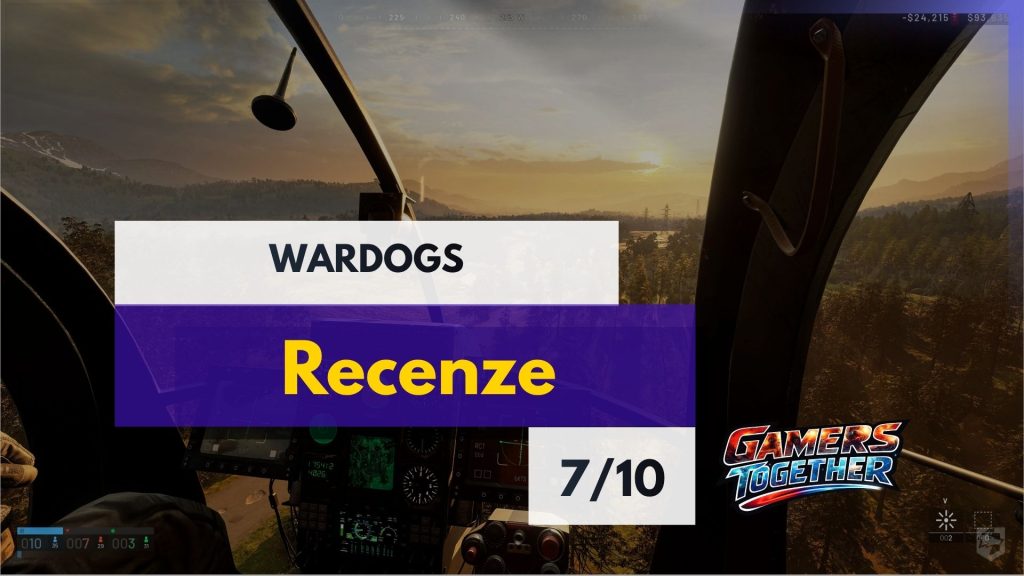
WARDOGS is the most interesting idea to show up in big shooters in years, and also a game that nearly tripped over its own feet on day one. A hundred players, three teams, one randomly drawn zone and money that matters as much as your aim. But it all comes with matchmaking queues lasting hours and the end of Steam Deck support. This review reflects the state of the game as of 11 September 2026, the second day of early access.
Review
WARDOGS
The most interesting idea in big shooters in years and one of the worst launches. The score reflects the game as it is today, not what it will become.
- Genre
- Tactical FPS (all-out warfare)
- Developer
- BULKHEAD (published by Team17)
- Release
- 10 September 2026 early access · consoles 2028
- Platforms
- PC (Windows), GeForce NOW
- Price
- €39.99 · Supporter Edition €49.99
What works
- The economy pays for teamwork, not solo kills
- Three teams and a random zone, no memorized winning route
- Destruction and building change the map during a match
What doesn’t
- Matchmaking queues lasting tens of minutes and crashes afterward
- Steam Deck and Linux support dropped after working in the beta
- A wave of false bans at launch
Rated on the state of the game as of 11 September 2026, the second day of early access · Steam 66.6% positive out of 25,767 reviews
What WARDOGS tries to do differently
Big shooters roughly fall into two camps: either two sides fight over fixed points, or the game drops you into a battle royale and waits to see who’s left. WARDOGS does neither. Inside a huge map, a two-by-two-kilometer control zone is picked at random, and three teams fight over it at once. Points go to whoever has the most people in the zone at a given moment. The first team to reach a hundred points wins.
On paper it’s a detail. In the game it changes everything. With two sides, there’s a front line and a safe area behind it. With three, there’s no front line: the position you just captured can be taken by a third team you didn’t know about. And because the zone’s location is random, you can’t learn one winning route. Every match literally starts somewhere else.
Money is your second weapon
This is the heart of it and the reason the game deserves attention. There are no classes. You start with ten thousand dollars and buy your gear for every life: weapons, equipment, gadgets, vehicles. What you bring into a match is a purchasing decision, not a pick from a character menu.
What really matters is what you get paid for. The game rewards reviving teammates, driving people to the zone and holding the objective, exactly the things you do out of the goodness of your heart in other shooters without anyone thanking you. A pilot who ferries the team to the right spot earns more than a player with a good kill ratio. That’s not a small thing. It’s a design decision that changes how people behave in a match.
And because money carries over between matches, you get a layer this genre usually doesn’t have: deciding whether to save. You can play three matches frugally and then buy a tank at the moment it decides the fight. Or you can spend as you go and never have the leverage for a comeback. Both work, and both are a choice.
A map you can rebuild or level
Buildings aren’t set dressing. You can blow them apart with a rocket launcher or drive a tank through them. In the other direction, players can build a forward base and seal off a chokepoint so the enemy has a hard time getting through. A match doesn’t end in the same landscape it started in.
Proximity voice chat fits this well. You hear whoever is nearby, enemies included, which creates situations no one could script, from negotiations to insults through a wall. In a game built on cooperation, it’s a better tool than any command system.
A launch that nearly sank it
Now for the unpleasant part, and there’s plenty of it. Interest was huge: over 1.25 million copies sold on day one and over 340,000 concurrent players on Steam. The servers weren’t ready for that. Players reported matchmaking queues lasting tens of minutes to hours and game crashes after they’d sat through the wait. The Steam rating dropped to “Mixed”, 66.6% positive out of 25,767 reviews.
The second blow hit Steam Deck owners and Linux users. At launch the studio added an anti-cheat that doesn’t work with the Proton compatibility layer, so the game won’t start on the Deck or on Linux, even though it worked in the beta. People who tried it that way and bought it were left out. The developers hinted that support may come later but gave no date.
On top of that came a wave of false bans and accusations that the studio lets streamers into matches outside the queue. BULKHEAD denied it and started reversing the bans, but the impression stuck.
It’s fair to separate two things. Almost none of the negative reviews target how the game plays. They target the fact that you can’t get into a match. That’s the difference between a bad game and a bad launch, and this is the second case.
What the game doesn’t have yet
WARDOGS is in early access, and the studio estimates it will stay there for one to two years. Before the full release, deeper progression, seasonal content, more maps, weapons, vehicles including fighter jets and new objective variants are set to arrive. The PS5 and Xbox Series X|S versions are announced for 2028, roughly around the time of the full release.
The game supports fourteen languages, including Polish.
Who it’s for
Buy it if you enjoy big battles, a game still in development doesn’t annoy you and you like that teamwork finally pays off, even from a purely selfish point of view. According to the developers, the €39.99 price is also temporary and will go up once the game leaves early access.
Skip it if you want a finished product, play on Steam Deck or don’t have the patience for a queue that can sideline you for an hour. None of that is permanent, but it’s true today.
Verdict
Seven out of ten, and it’s a seven made of two very different numbers. The game’s design deserves an eight or a nine: an economy that rewards cooperation, three teams instead of two and a random zone together make something no one else in the genre is doing. The state at launch deserves a five. The final score is about what you’re buying today, not about what it might become one day. Once the queues disappear and the Deck is back, this review will deserve an upward revision.
FAQ
If you don’t mind a game still in development and longer waits for a match, yes, and the price will go up once it leaves early access. If you want a finished, polished product, wait.
Because of matchmaking queues lasting tens of minutes to hours, crashes after the wait, the end of Steam Deck support and a wave of false bans. Hardly anyone complains about the gameplay itself.
No. Three teams fight over a control zone, and after you die you return to the game with newly purchased gear.
You can play solo, but the game rewards team activities: reviving, driving teammates and holding the zone. With a squad you earn more and get more out of the game.
The studio expects one to two years in early access, so roughly 2028. The console versions are targeting the same timeframe.
Not as of 11 September 2026. The anti-cheat added at launch doesn’t support Proton, so the game only runs on Windows.
The game is a one-time purchase. On top of the base edition there’s a Supporter Edition for €49.99 that adds a cosmetic Supporter Pack with no gameplay advantage.