
Hollow Knight: Silksong is Team Cherry’s follow-up to Hollow Knight. You play as Hornet, the hunter and princess-protector of Hallownest, who ends up in the unfamiliar kingdom of Pharloom and climbs towards its peak. This guide explains how healing works, what happens to your money when you die, where to get a map, how to unlock fast travel and which mistakes to avoid in your first hours. The tips apply to every platform (PC, PlayStation, Xbox, Switch and Switch 2), as of 20 October 2026 (version 1.0.30000 from Patch 5 on PC).

What’s different from Hollow Knight
If you played the original, the controls and the mood will feel familiar, but a few fundamentals work differently. These are the changes most likely to catch you out early on:
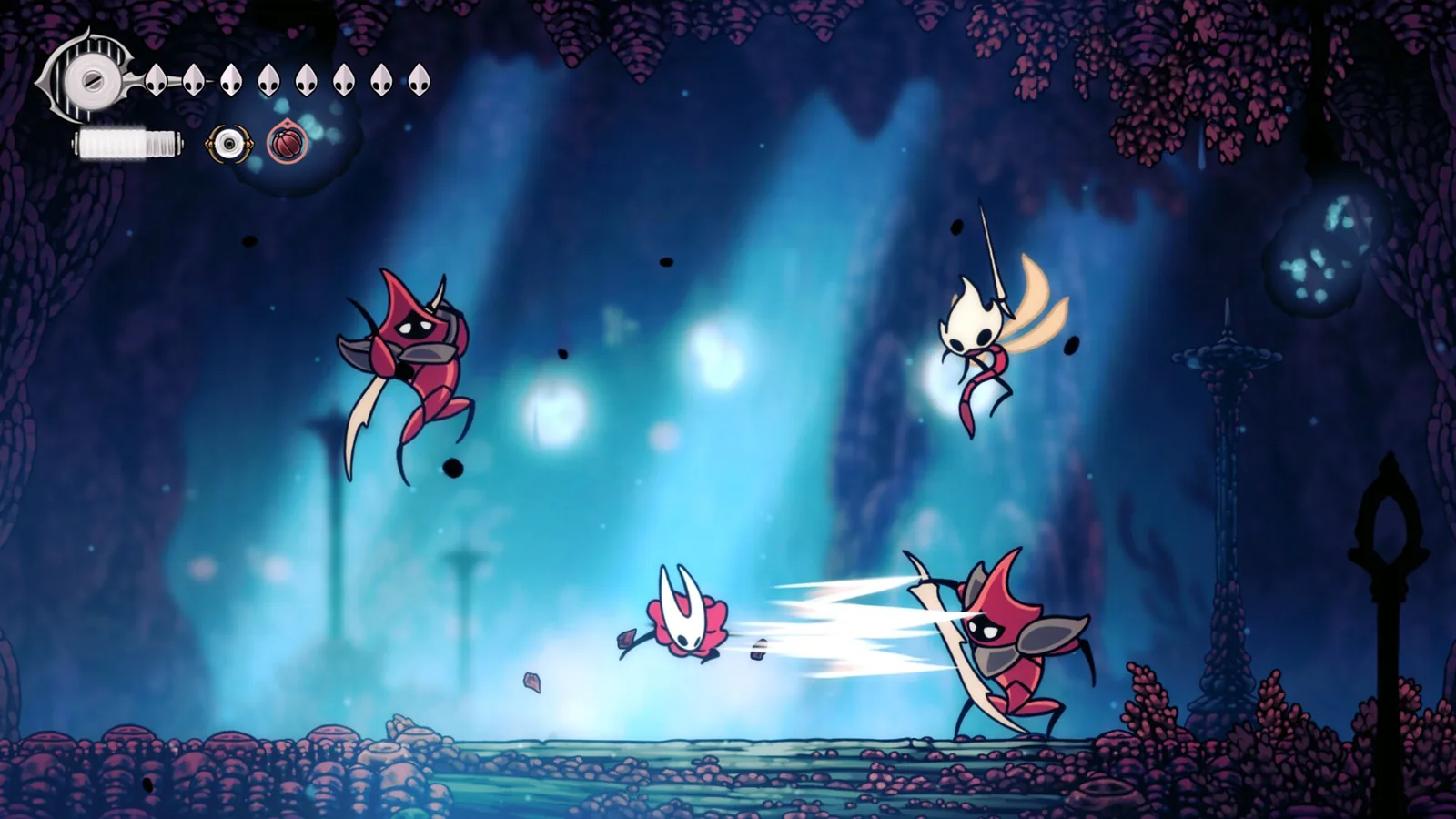
- Healing with Bind. Bind uses Silk from the spool you fill by hitting enemies. One Bind restores three masks of health, and you can use it in mid-air too.
- Silk does more than heal. Offensive Silk Skills such as Silkspear draw from the same Silk. Both IGN and GamesRadar+ advise against hoarding Silk purely for healing.
- A diagonal down attack. Hornet’s default Hunter crest strikes diagonally downwards, not straight down like the Knight in the first game. Bouncing off things with your down attack (pogo) takes some practice. Other Crests change the down attack.
- Harder hits. Many enemies and almost all bosses take two masks per hit. In Hollow Knight one mask was the norm.
- Your loadout. Your equipment is one active Crest, which decides your attacks and slots, plus the Tools you place in those slots. The full system is explained in our Tools and Crests guide.
Death, Rosaries and Shell Shards
There are two currencies. Rosaries are the main currency at merchants. Shell Shards are mostly used to refill your Tools.
When you die, your rosaries stay where you fell, wrapped in a cocoon. Head back, break the cocoon and pick them up again. Shell Shards are never lost on death.
You can also insure a bigger stash. For 80 rosaries you get a Rosary String holding 60 rosaries. The string isn’t lost when you die, but you can only spend its rosaries after breaking it in your inventory. You give up a little value in exchange for keeping your money safe.
Bear in mind that not every enemy drops rosaries. They mainly come from certain humanoid pilgrims, from hanging strings and statues of beads, and from chests. Faster ways to collect them are covered in our rosary farm guide.
Benches, maps and Bellways
The bench is your checkpoint
Resting at a bench sets the spot where you respawn after dying. Benches are also the only place where you can swap your Crest and Tools, and resting there refills your red attack Tools, which costs Shell Shards. Stopping at a bench before you push into the unknown is always worth it.
You have to buy the map
Silksong doesn’t start you off with a map. Area maps and mapping gear are sold by the cartographer Shakra, whom you first meet in The Marrow and later in other places. The Compass is a yellow Tool that shows Hornet’s position on the map, and it only works while equipped. The Quill fills in explored areas on maps you already own.
Fast travel
Fast travel runs on the Bellways. They unlock after you defeat the Bell Beast boss, and you then open each further station by paying rosaries.
Your first hours: Wishes and key abilities
Wishes are side quests from characters, mostly posted on boards in towns. Their rewards help you progress, so don’t skip them. A good early example is the Moss Druid: bring him three Mossberries and you get Druid’s Eye, a blue Tool that gives you extra Silk.
Three abilities change how you get around the world:
| Ability | What it does | Where you get it |
|---|---|---|
| Drifter’s Cloak | gliding | Far Fields (near the Seamstress, in the lower part of the area) |
| Swift Step | sprint and dash, also in mid-air | Deep Docks |
| Cling Grip | wall climbing and wall jumps | Shellwood, after the Sister Splinter fight |
Pharloom is full of hidden walls and secret rooms, so a corridor that ends suspiciously early is worth a closer look.
What not to do in your first hours
- Don’t save Silk only for healing. Silk Skills use the same spool and help in fights.
- Don’t carry big piles of rosaries uninsured. Once you can afford a Rosary String, get one before you die far from your cocoon.
- Don’t skip Shakra. Without a bought map and an equipped Compass it’s easy to get lost.
- Don’t bang your head against one wall. Return to older areas with new abilities. New paths, extra masks and rosaries wait there.
- Don’t forget the bench. Without it you can’t change your Crest or refill red Tools.
How hard is the start?
Silksong has no difficulty setting and no easy mode. In Patch 1, though, Team Cherry slightly toned down the early bosses Moorwing and Sister Splinter and increased rosary rewards, so the opening is a bit gentler today than it was at launch. What critics say about the difficulty and how Steel Soul mode works is covered in our Silksong difficulty guide. According to critics, reaching the first credits takes roughly 30 hours, with details in our Silksong length guide.
Join our Discord to ask other players where to go next when you’re stuck: GamersTogether Discord.
How players and critics rate Silksong is summed up in our Hollow Knight: Silksong review (9/10).
FAQ
Yes, but you don’t start with one. You buy area maps from the cartographer Shakra, first met in The Marrow. Your own position only shows on the map with the Compass Tool equipped.
One Bind restores three masks. It uses Silk from the spool you fill by attacking, and you can use it in mid-air.
Not for good. Your rosaries stay in a cocoon where you died, so go back and break it. Shell Shards are never lost, and neither are rosaries stored in a Rosary String.
No. Silksong is a single-player game with no online or local co-op.
Information verified on 20 October 2026. More guides are waiting in our Silksong guides hub.